Introduction
Nepal’s digital
economy is growing rapidly, and more small and medium-sized businesses (SMEs)
are investing in websites to expand their reach. However, many business owners
are disappointed with the results. They expect that simply having a website
will automatically bring customers and increase sales.
On the other side,
many web developers in Nepal are IT graduates or freelancers who offer low-cost
website development services to earn income. This creates a major gap between
expectation and reality.
This article explores
why most websites in Nepal fail to deliver results and what both businesses and
developers can do to improve outcomes.
Example: A consultancy
in Kathmandu spends NPR 8,000 on a website. It looks fine and works well, but
after months there are no inquiries. Later, it even shows a “Not Secure”
warning, and the developer is no longer available. The business owner
concludes, “Websites don’t work.” But the real issue isn’t the website—it’s the
gap between expectations and reality. Businesses expect instant results, while
developers usually deliver only a basic site without SEO, branding, updates, or
long-term support.
|
50% Individual penetration
in Nepal (2024) |
31% Actual digital
literacy rate |
15,000+ IT graduates entering
market yearly |
60% Struggle to find jobs
within 6 months |
Although internet
access is widespread in Nepal, digital literacy remains limited. As a result,
many businesses misunderstand how websites work and often invest in them
without achieving the expected results.
Five Points Where Websites Fail in Nepal
| S.N. | Failure Points | What goes wrong |
| 1 | Unrealistic Expectations | Many business owners think a website will automatically bring customers like a banner attracts attention. But online, nothing works on its own — you need SEO, content, and regular effort to get results. |
| 2 | Race to the bottom on price | In Nepal, websites are often made for just NPR 5,000–15,000. At that price, there’s usually no room for things like SEO, security, performance, branding or proper support. Because of this, both the client and developer often end up expecting different results. |
| 3 | No SEO — no visibility | A website without SEO is basically invisible online. Most people in Nepal search on Google before they buy anything, so if your site doesn’t show up, customers won’t find it at all. |
| 4 | Lack of post-launch support and quality | Websites need regular updates, security fixes, and maintenance. But cheap, one-time projects usually don’t include this. Over time, the site becomes outdated, slow, or may even stop working properly. |
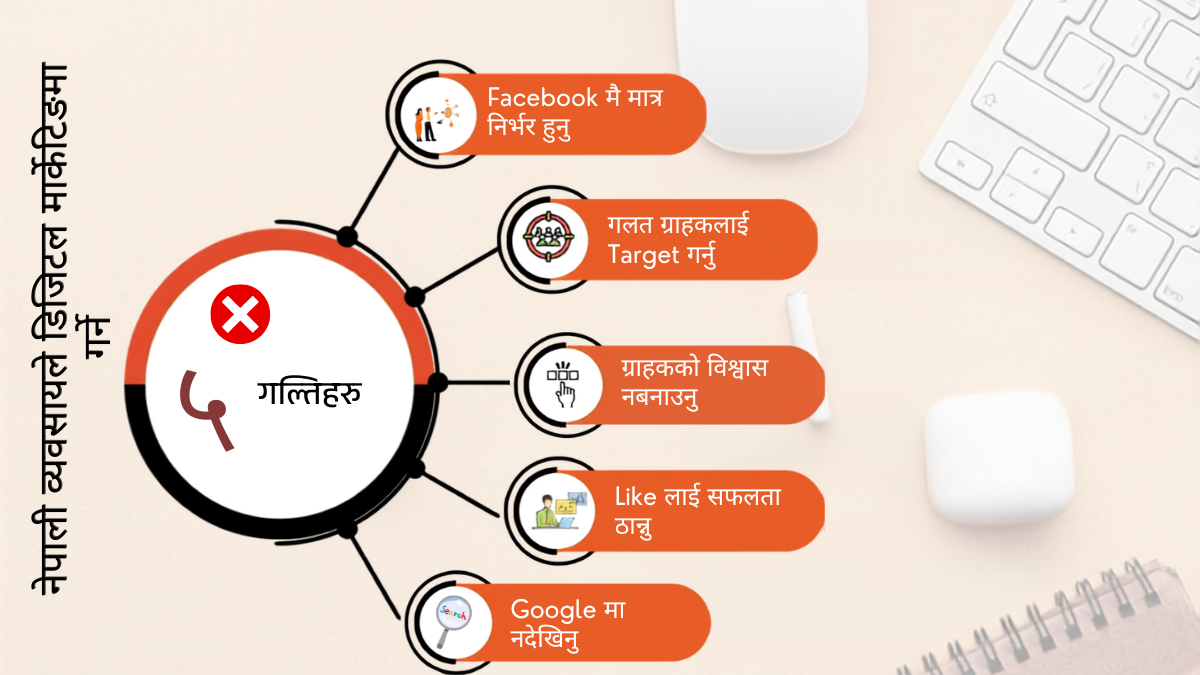
| 5 | Confusion between branding and promotion | Many business owners think a Facebook page is enough instead of a website,or that a logo alone is their brand. But each one has a different role. |
"Hamro website banayo, tara kei faida bhayena. Paisa waste bhayo." ("We got a website made, but nothing happened. The investment felt wasted.").
The Survival Developer
Phenomenon
On the other side,
developers face a different pressure. Nepal produces around 15,000 IT graduates
every year, but many don’t get industry-ready skills. As a result, a large
number turn to freelancing just to earn a living.
These are often called
“survival developers.” They can build websites, but may not fully understand
what makes a website successful — like SEO, speed, mobile design, branding,
promotion or aligning with business goals. This isn’t about blaming
individuals, but about a system that focuses more on coding than real-world
digital work.
Real Cases and Real
Patterns
Many platforms in
Nepal start with good ideas and working websites, but later become outdated or
inactive. This often happens because there’s no long-term plan for updates,
SEO, or maintenance.
Platforms including
MyStoreNepal, NepalOffers, Bhettincha and eSewaPasal.com all launched with
credible goals and working interfaces, and later became outdated, partially
broken, or inactive due to weak post-launch strategy and maintenance.
What Needs to Change —
and For Whom
There is no single
solution to this problem. Everyone involved in Nepal’s digital ecosystem needs
to change the way they think and work.
1. For developers: They should not only focus on building
websites. Basic SEO should be included in every project. They should also
clearly explain what is included in the service and avoid very low pricing that
reduces quality.
2. For business owners: A website is not a one-time solution. It
is like a digital shop. Before making one, they should understand their
customers, how people will find them online, and what action they want visitors
to take.
3. For universities: IT education should include real-world
skills like SEO, client communication, and project planning. Students should
work on real projects, not just classroom assignments.
4. For policymakers: There should be clear quality standards
for web services, and digital literacy programs should teach businesses how
websites and online marketing actually work.
Change will not happen
overnight. But small steps from each group—better planning, fair pricing, and
better education—can slowly improve the situation.
Frequently Asked
Questions (FAQs)
1. Why do websites fail
in Nepal?
Because many are launched without adequate SEO, marketing, maintenance, and
long-term planning.
2. Does a website automatically bring customers?
No. A website can support business growth, but it requires SEO, promotion,
quality content, and ongoing effort to attract visitors.
3. Why are websites often inexpensive in Nepal?
Strong competition among developers often drives prices down, reducing the
budget available for quality services and long-term support.
4. Who is responsible when a website fails?
Responsibility is usually shared. Business owners may expect immediate
results, while developers may focus only on building the website without
addressing visibility, marketing, or maintenance.
Conclusion
The problem in Nepal is not the lack of technology. The tools and talent already exist. The challenge is that many people misunderstand what a website can do and how much effort is needed to make it successful. A website can work for a business day and night, helping customers find and trust it. However, real results come when businesses invest in SEO, maintenance, branding, promotion and continuous improvement—not just the initial launch. A website is not a one-time purchase; it is an ongoing business investment. Businesses that treat it that way are far more likely to succeed in the digital marketplace.