Introduction
A few years ago, just having a
Facebook page or a simple online listing was enough for small businesses.
People usually made decisions based on what others said or by visiting the shop
directly. But now in 2026, that has completely changed.
Before buying anything, people
first search online. They look at different options, compare prices, read
reviews, and only then decide. Most of the time, their first impression of a
business comes from its website, not from meeting someone in person.
For example, if someone wants to
buy a dress, they won’t just go to one shop. They’ll check different websites,
compare styles and prices, and then choose what suits them best.
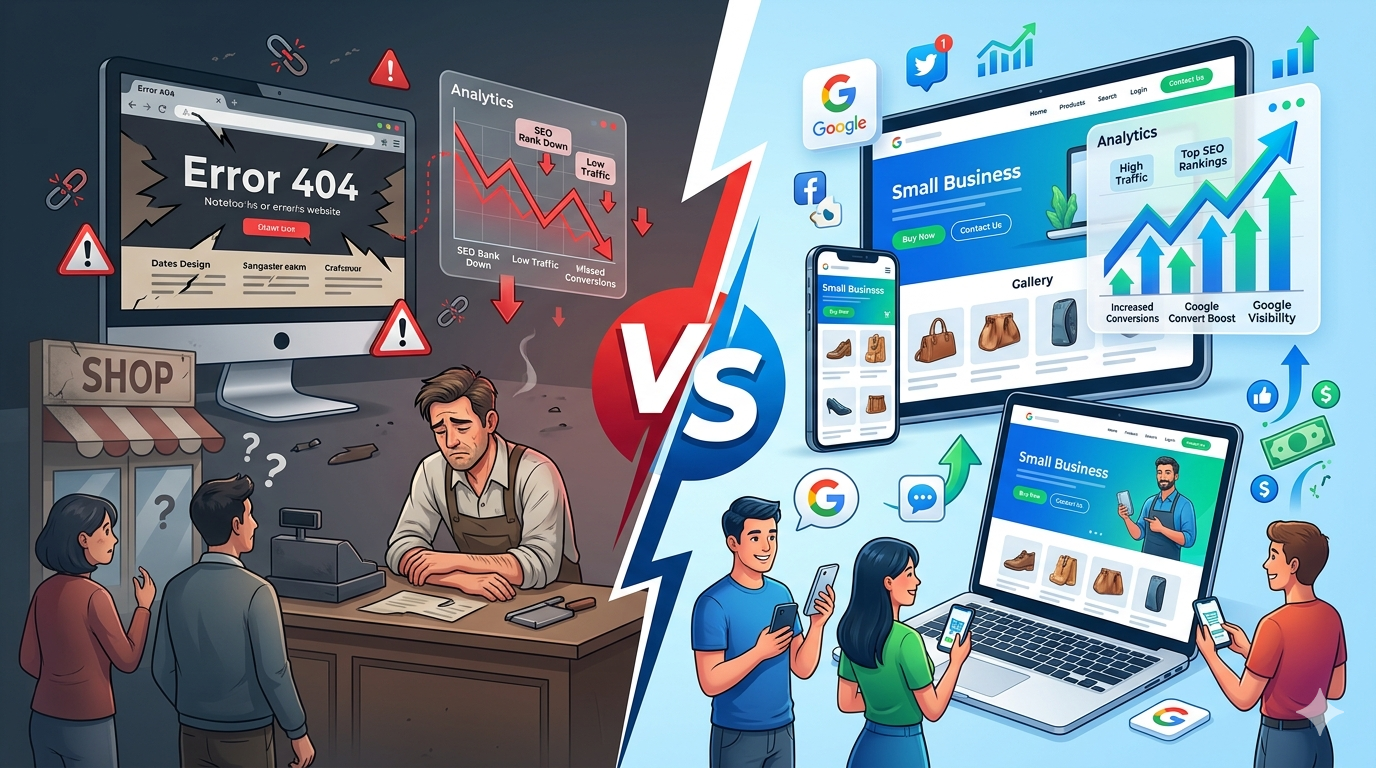
So, if a business doesn’t have a
website—or if the website looks old, slow, or untrustworthy—customers will
simply move on to another option. Today, a website is not just something extra.
It shows whether people can trust your business or not.
Your Website Is Your Main
Sales Point
Your website works like your main
shop in the digital world. Unlike social media, it is not controlled by
algorithms or limited reach. It works 24/7 and is always available to
customers.
A good website does more than just
show information. It helps visitors understand your business and guides them
toward action—like contacting you, booking a service, or making a purchase.
If a website is confusing or
missing details, customers will not wait. They will leave and choose a
competitor with a clearer and more professional site.
Importance of Having a Website
A website is important because it
builds trust, improves visibility, and helps customers understand your business
better. It also gives your business a professional identity. When people see a
well-made website, they feel more confident that your business is real, active,
and reliable.
Without a website, your business
may look incomplete or less serious, even if your product or service is good.
Benefits of Having a
Website for Small Businesses
Having
a website brings many benefits:
1.
Builds
trust: Customers
trust businesses that have a professional online presence.
2.
24/7
availability: Your
business stays open online all the time.
3.
More
customers: People
can find you through Google and other search engines.
4.
Better
marketing: You can
promote your services easily online.
5.
Showcase
products/services:
You can clearly display what you offer.
6.
Cost-effective
growth: Compared
to traditional marketing, a website is cheaper and more effective.
Impact of Technology in
2026
Technology has completely changed
how businesses work in 2026. Artificial intelligence, fast internet, and
smartphones have made everything instant. Customers expect quick responses,
smooth websites, and easy online access.
Search engines and AI tools now
help users find exactly what they need within seconds. This means businesses
without a strong online presence are easily ignored.
Even small businesses now compete
with larger companies online. Technology has made the market more open, but
also more competitive.
Search Visibility Depends
on Your Website
Search engines like Google
prioritize websites over social media pages when showing results.
This means your visibility online
is directly connected to your website quality, structure, and performance.
Factors such as loading speed, content relevance, and SEO optimization
determine whether your business appears in search results or not.
Without a proper website, your
business becomes almost invisible to customers actively searching for your
services. In simple terms: no website means no organic discovery.
Trust Is Built Within
Seconds
Visitors form an opinion about your
business within a few seconds of landing on your website.
A modern, clean, and well-organized
website instantly builds confidence. It signals that your business is active,
legitimate, and professional.
Elements like service clarity,
customer reviews, and case studies help reduce doubt and improve trust. On the
other hand, an outdated or poorly designed website creates uncertainty. Even if
your product or service is good, customers may leave before contacting you.
Mobile Experience Is the
New Standard
In 2026, most people use mobile
phones to browse the internet. If your website is not mobile-friendly, users
will struggle with slow loading, bad layout, or hard navigation. Most will not
stay after a poor experience.
That’s why modern websites are
designed with a mobile-first approach, making sure everything works smoothly on
all devices.
You Own Your Website,
Unlike Social Media Platforms
Social media is useful, but it is
not fully reliable for long-term business growth. Platforms can change
algorithms anytime, reduce reach, or even restrict accounts.
But your website belongs to you.
You control your content, branding, and customer experience. It is a long-term
digital asset that grows with your business.
Frequently
Asked Questions
1. Why does a small business need a
website in 2026?
Because most customers now search
online before buying anything. A website helps people find your business, trust
it, and choose your services over competitors.
2. Can social media replace a
website?
No. social media is useful, but it
is not stable or fully controlled by you. A website is your own platform where
you control everything—content, design, and customer experience.
3. How does a website help increase
sales?
A website shows your products or
services clearly and guides visitors to take action, like contacting you or
making a purchase. It works as your online shop available 24/7.
4. What happens if my business does
not have a website?
Without a website, your business
becomes harder to find online. Many customers may choose competitors who have a
professional and trustworthy website.
5. Does a website help with Google
ranking?
Yes. A properly optimized website
helps your business appear in Google search results, making it easier for
customers to discover you.
6. Is having a website expensive
for small businesses?
Not necessarily. Today, websites
can be built at affordable costs, and they provide long-term value by bringing
in more customers.
Conclusion
A professional website is no longer a luxury or an optional marketing tool. It is essential infrastructure for any business operating in a digital-first economy. It defines how customers perceive your brand, how easily they find you, and whether they trust you enough to take action. In many cases, your website is the deciding factor between gaining or losing a customer.
The important reality is that this
is fully within your control. With the right design, structure, and strategy,
any business can build a website that improves visibility, builds trust, and
drives consistent growth.
In 2026, businesses that treat their website as a core asset will continue to grow. Those that do not will slowly become invisible, even if their products or services are good. Your website is not just part of your business. For most customers, it is your business.