Overview
· Data-driven consulting means making
business decisions based on real data and analysis rather than assumptions.
· It is applied among strategy,
marketing, operations, HR, finance, and IT consulting
· Even small businesses in Nepal can
adopt data-driven practices without expensive tools
· Main benefits are better
decisions, reduced waste, stronger client trust, and measurable results
· The main challenges are poor data
quality, data overload, and lack of internal data literacy.
· Businesses that build data-driven
cultures now will have a significant competitive advantage over the next three
to five years
Every week, Nepali business owners
make important decisions. Which marketing channel to invest in next month.
Whether to hire two more staff or hold back. Which product line to expand.
Whether the current sales strategy is actually working or just feels like it is
working.
Most of those decisions are made
based on experience, intuition, and what worked before. Sometimes that is
enough. But increasingly, in a business environment where competition is
growing, margins are tightening, and customer expectations are rising, making
decisions without solid data is a significant and avoidable risk.
Data-driven consulting is the
practice of replacing those gut-feeling decisions with structured,
evidence-based analysis. It is one of the most important shifts happening in
how modern businesses operate, and it is directly relevant to companies in
Nepal right now, regardless of size or industry.
What
Is Data-Driven Consulting?
Data-driven consulting is an
approach where business recommendations, strategies, and decisions are grounded
in actual data rather than assumptions or experience alone.
In traditional consulting, an
experienced consultant comes in, observes the business, draws on their past
experience, and recommends a course of action. That experience is valuable. But
it has limits. It is shaped by what worked before in different contexts,
different markets, and different conditions. It cannot always account for what
is actually happening inside your specific business right now.
Data-driven consulting adds a layer
of evidence to that process. It involves collecting relevant business data,
analyzing it systematically to identify patterns, problems, and opportunities,
and using those findings to make recommendations that are grounded in what is
actually happening rather than what feels like it should be happening.
Nepal context: A Nepali ecommerce
business might feel that their Facebook ad campaigns are their best customer
acquisition channel because they generate the most visible activity. But when
their actual sales data, customer acquisition cost, and customer lifetime value
are analyzed properly, it often turns out that organic search or direct
referrals are generating higher-value customers at a lower cost. Without data
analysis, the business keeps over-investing in the channel that feels most
active rather than the channel that is most profitable.
Why
Does Data-Driven Consulting Matter for Nepali Businesses in 2026?
Nepal's business landscape is
changing faster than most business owners realize. Ecommerce has grown
significantly. Digital payments through eSewa and Khalti have normalized.
Customer expectations for speed, reliability, and personalization are higher than
they were three years ago. Competition in categories that were once dominated
by a single player is now intense.
In this environment, businesses
that make decisions based on evidence consistently outperform those that make
decisions based on habit and assumption. The gap between data-informed
businesses and intuition-driven businesses grows larger every year because data
insights compound over time. Each good decision creates better conditions for
the next one.
Most Nepali businesses are already
generating more useful data than they realize. Website analytics. Sales
transaction records. Customer inquiry patterns. Employee productivity data.
Inventory movement. Marketing campaign performance. This data exists. The
problem is that very few businesses have a systematic way of collecting it
properly, analyzing it regularly, and actually using it to inform decisions.
Data-driven consulting bridges that
gap. It helps businesses turn data they already have into insights that
actually change how they operate.
What
Are the Different Types of Data-Driven Consulting?
Data-driven consulting is not a
single service. It applies differently depending on which part of the business
it is being applied to.
1. Strategy Consulting
Strategy consulting uses market
data, competitive analysis, and internal performance data to help businesses
identify the right direction. For a Nepali business deciding whether to expand
to a new city, enter a new product category, or invest in a new channel,
strategy consulting grounded in actual market data produces far better
decisions than strategy based on broad assumptions about the market.
2. Marketing Consulting
Marketing consulting uses campaign
performance data, customer behavior data, and conversion analytics to improve
how businesses attract and retain customers. For Nepali businesses spending on
Facebook ads, Google Ads, or SEO, data-driven marketing consulting answers the
most important question: which of these is actually generating profitable
customers and which is just generating activity that looks good in reports?
3. Operations and Process
Consulting
Operations consulting uses workflow
data, process timing, error rates, and cost-per-transaction data to identify
inefficiencies and improve how work gets done. This connects directly to
Business Process Optimization, which we covered in detail in our previous
guide.
4. Human Resources Consulting
HR consulting uses workforce data
including hiring timelines, employee performance, turnover rates, and training
effectiveness to help businesses make better people decisions. For growing
Nepali businesses, knowing which hiring sources produce the best long-term
employees or which management practices correlate with lower turnover is
enormously valuable.
5. Financial Consulting
Financial consulting uses revenue
data, cost structures, cash flow patterns, and financial forecasting models to
improve how businesses manage and grow their financial performance. For Nepali
businesses where financial planning is often informal, data-driven financial
consulting provides clarity that prevents the cash flow surprises that derail
otherwise healthy businesses.
6. IT Consulting
IT consulting uses system
performance data, security audit findings, and infrastructure utilization
metrics to help businesses make better technology investment decisions. Rather
than buying the most expensive or most popular tools, data-driven IT consulting
identifies what your business actually needs based on how your current systems
are performing.
What
Are the Key Benefits of Data-Driven Consulting for Nepali Businesses?
1. Better Decision Quality
The most direct benefit is simply
making better decisions. When a Nepali business owner decides to invest NPR
2,00,000 in a marketing campaign based on data showing which channels have
historically produced the best return, that decision is more likely to succeed
than one made based on which channel a competitor appears to be using.
2. Reduced Waste
One of the most consistent findings
when businesses begin analyzing their operations properly is that significant
resources are being spent on activities that produce little measurable value.
Marketing budgets going to channels that are not converting. Staff time spent
on processes that could be automated or eliminated. Inventory being held for
products that rarely sell. Data-driven consulting identifies this waste
directly.
3. Stronger Client and Stakeholder
Trust
When consultants and business
leaders make recommendations backed by clear data, those recommendations are
easier to explain, easier to defend, and easier to get buy-in for. In a Nepali
business context where senior leadership often needs to be convinced before
changes are made, having data behind a recommendation is significantly more
persuasive than having an opinion.
4. Real-Time Performance Visibility
Modern data-driven consulting
setups give businesses ongoing visibility into how they are performing rather
than relying on monthly reports that are already outdated by the time they are
read. For Nepali businesses competing in fast-moving categories, knowing today
how last week's campaign performed is more useful than finding out in three
weeks.
5. Competitive Advantage
In Nepal's current business
environment, most companies are still making major decisions intuitively. This
means that a business that develops genuine data analysis capability has a real
and growing advantage over competitors who are navigating blind.
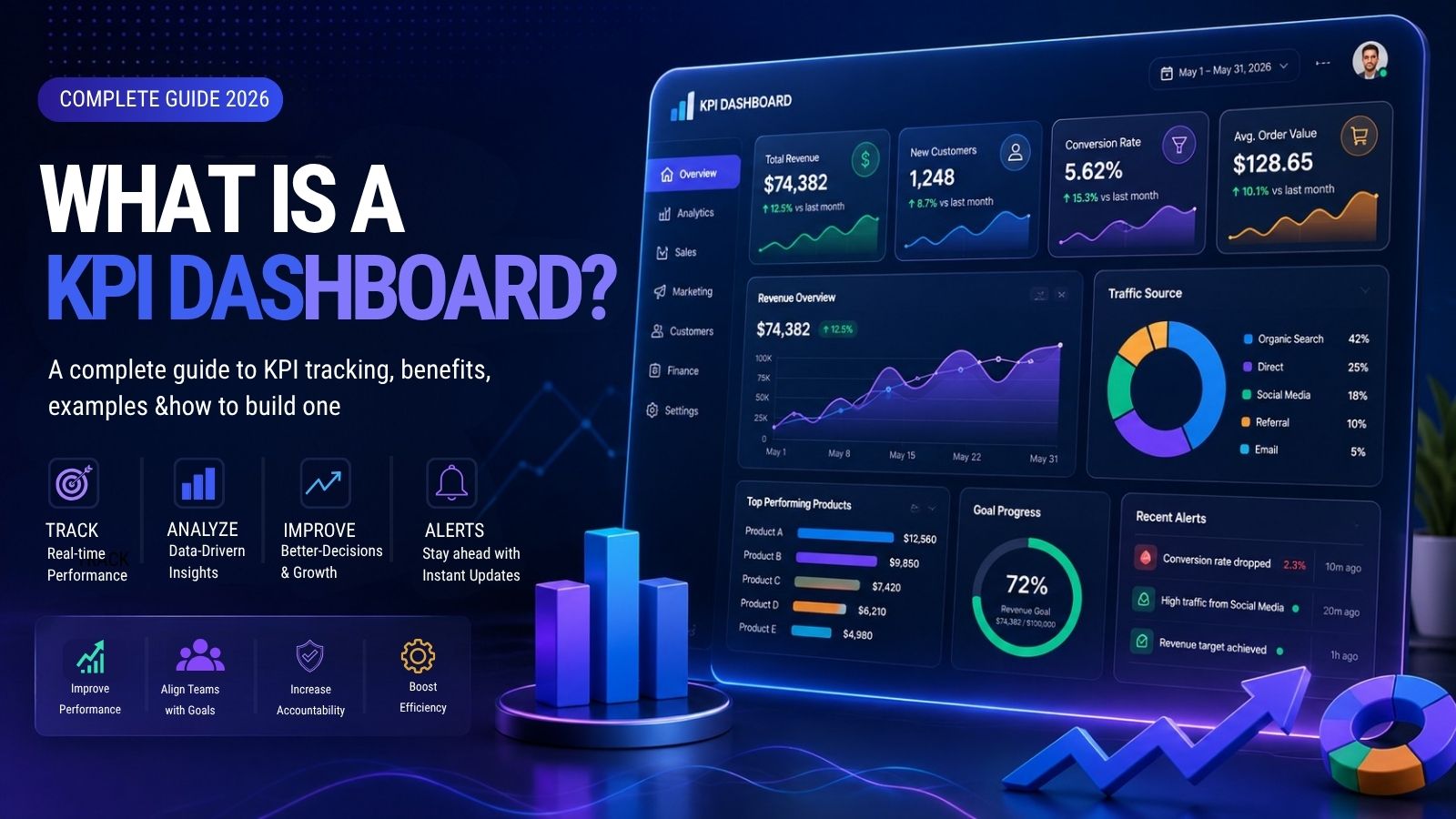
What Technology Do You
Need for Data-Driven Consulting in Nepal?
This is where many Nepali business
owners assume data-driven consulting is out of their reach because they imagine
it requires expensive enterprise software and a team of data scientists. That
assumption is wrong.
The most important factor in
data-driven consulting is not the sophistication of the tools. It is the
quality and relevance of the data being collected and the discipline of
actually using it in decisions.
A Nepali retail business can get
enormous value from properly analyzing their sales data in a well-structured
spreadsheet. A service business can make significantly better decisions by
properly tracking their lead sources, conversion rates, and customer value in a
basic CRM. A restaurant can improve purchasing decisions dramatically by
analyzing their sales patterns by day, time, and dish over a 90-day period.
As businesses grow, more powerful
tools become relevant. Business intelligence platforms like Google Looker
Studio, which is free, Power BI, and Tableau can turn large datasets into clear
visual dashboards that make patterns obvious. Analytics platforms like Google
Analytics 4 provide deep insight into website and customer behavior. Customer
data platforms can unify data from multiple sources into a single view.
The right approach for most Nepali
businesses is to start with the data they already have, build simple but
consistent analysis practices around it, and then invest in more powerful tools
as the volume and complexity of data grows to a point where basic tools become
limiting.
What Are the Main
Challenges of Data-Driven Consulting in Nepal?
1.
Data Quality Problems
The most common problem is
businesses have data which is not clean or reliable enough to analyze
usefully. Sales data is incomplete because all transactions are have not
been recorded. Duplicate and inconsistence found in Customer
data. Financial records mix categories in ways that make trend analysis
impossible.
Before data-driven consulting can
deliver value, there often needs to be work done on how data is collected and
recorded. This is unglamorous work but it is foundational.
2.
Data Overload
The opposite problem also exists.
Some businesses have access to so much data across so many platforms that
nobody knows where to start or what to focus on. Website analytics, social
media metrics, sales data, customer service data, and financial data are all
available but nobody is synthesizing them into useful insights.
Data-driven consulting solves this
by identifying which data actually matters for specific business decisions and
focusing analysis there rather than trying to analyze everything at once.
3.
Lack of Data Literacy
Many Nepali business teams do not
have strong data analysis skills. Reading a spreadsheet is not the same as
identifying meaningful patterns, understanding statistical significance, or
knowing which metrics actually indicate business health versus which ones just
look impressive. Building data literacy across a team takes time and deliberate
effort.
4.
Resistance to Changing Decisions
Possibly the most underestimated
challenge is cultural. When data analysis suggests a course of action that
contradicts what experienced leaders believe is right, there is often
resistance to trusting the data. Building genuine data-driven culture means creating
an environment where data is treated as an input to decisions that matters as
much as experience and intuition, not one that is selectively used only when it
confirms existing beliefs.
Frequently Asked
Questions
1.
Is data-driven consulting only for large companies in Nepal?
No. The principles apply to
businesses of any size. A small Nepali retail shop analyzing which products
sell best by day and season and adjusting their purchasing accordingly is
practicing data-driven decision making. The sophistication of the tool scales
with the size of the business but the core approach is accessible to everyone.
2.
How much does data-driven consulting cost in Nepal?
Costs vary significantly depending
on scope. A basic data audit and consulting engagement for a small Nepali
business might cost NPR 25,000 to 60,000. A more comprehensive ongoing
consulting relationship for a medium-sized business with regular reporting and
analysis typically costs NPR 50,000 to 1,50,000 per month. Custom analytics
setup and dashboard development is typically priced per project.
3.
Where does a Nepali business start with data-driven consulting?
Start by identifying the three most
important decisions your business makes regularly. Then ask what data you would
need to make each of those decisions better. Then check whether you are
currently collecting that data and whether it is reliable. That gap between the
data you need and the data you have is your starting point.
4.
How long does it take to see results from data-driven consulting?
Initial insights from analyzing
existing data can be generated within days to weeks. Implementing changes based
on those insights and measuring their impact typically takes 1 to 3 months.
Building a mature data-driven decision culture across a Nepali business is a 6
to 18 months process depending on the starting point.
5.
What is the difference between data-driven consulting and business
intelligence?
Business intelligence refers to the
tools and systems used to collect, store, and visualize business data.
Data-driven consulting is the practice of using those insights to make better
strategic and operational decisions. Business intelligence provides the data.
Data-driven consulting determines what to do with it.
Conclusion
Data-driven consulting is not a
futuristic concept or a luxury reserved for multinational companies. It is a
practical approach to making better business decisions that is accessible to
Nepali businesses of every size right now.
The businesses in Nepal that build
data-driven practices today will have a compounding advantage over the next
three to five years. Each good decision informed by data creates better
conditions for the next one. Each insight acted on reduces waste and improves
performance. Each year of good data collection makes the analysis more powerful
and the decisions more reliable.
The businesses that continue
operating on intuition alone will find that gap increasingly difficult to close
as data-driven competitors make better decisions faster with less waste and
higher confidence. The starting point is straightforward. Identify your most
important recurring business decisions. Ask what data would make each one
better. Start collecting and analyzing that data consistently. Then use what
you find, even when it challenges what you assumed was true.
That discipline, applied
consistently over time, is what data-driven consulting actually is. And it will
change how your business competes.