Overview
· A digital project brief is a
document that defines what needs to be built, why it matters, who it is for,
and how success will be measured before development begins
· Most failed digital projects in
Nepal fail because of poor planning and unclear requirements, not technical
incompetence
· A good brief starts with the
business problem, not the solution
· Scope creep is the most common
cause of budget overruns in Nepali digital projects and a clear brief prevents
it
· You must define success metrics
before development starts, not after
· Leave technical decisions to your
developers while being clear about your business goals and user needs
· A well-written brief saves
significantly more time and money than it costs to produce
Every week in Nepal, business
owners go to developers and say they need a website, app, or system. The
developer agrees, gives a price, and the work starts.
After some time, problems come. The
project gets delayed, the cost goes up, and the final result is not what the
owner expected. The developer says they did what was asked, and the owner feels
something is missing. Both get frustrated.
This usually happens because there
is no clear plan before starting the work. No one clearly explains what they
want and what the final result should be.
A project brief is just a simple
written plan. It explains what you need and what the project should do. It
helps both sides understand each other and avoid confusion.
What Is a Digital Project
Brief and Why Do Nepali Projects Fail Without One?
A digital project brief is a simple
document made before development starts. It clearly explains what problem the
business wants to solve, who the users are, what will be built, which features
are important, and what budget and timeline are expected.
It is not a technical or design
document. It is just a clear agreement between the business and the developer
so both understand the same goal.
Without it, misunderstandings
happen. The client assumes the developer understands everything, and the
developer assumes the client has explained everything clearly. This leads to
confusion and wrong results.
Reasons for failure in Nepal
projects:
·
No
clear plan before starting
·
Wrong
assumptions between client and developer
·
Unclear
features and requirements
·
No
focus on real user needs
·
Poor
understanding of budget and timeline
In Nepal, many projects fail for
these reasons. For example, ecommerce sites are built without proper mobile
checkout, booking systems don’t match real payment methods, and apps include
features users don’t even need.
A simple project brief could avoid
most of these problems before development even starts.
Steps
to create a good Digital Project Brief
Step 1: Start With the Business
Problem, Not the Solution
This is the most important and most
commonly skipped step in Nepali digital projects.
When a business contacts a
developer and says we need a website or we need an app, they have jumped
straight to a solution without defining the problem. This creates an immediate
issue because a developer who does not understand the underlying business problem
cannot make good decisions about what to build or how to build it.
The right starting point is always
the business problem.
Instead of saying we need a
website, say our potential customers cannot find us online and we are losing
inquiries to competitors who appear in Google search results.
Instead of saying we need an app,
say our field sales team is losing orders because they cannot check inventory
or process payments when they are outside the office.
Instead of saying we need a
dashboard, say our management team is spending four hours every Monday morning
manually pulling data from three different systems to produce a report that is
already outdated by the time it is read.
When the business problem is
clearly defined, developers and designers can make genuinely good decisions
about the right solution. It also means the finished product can be evaluated
against a real business outcome rather than just whether it matches a vague
initial description.
For your project brief, write two
to four sentences that describe the specific business problem your project is
solving. Be honest about what is going wrong right now and what a successful
outcome would change in your business.
Step 2: Define Your Target Users
Clearly and Specifically
The second most common failure in
Nepali digital projects is building a product for a vague imaginary user rather
than a specific real one.
Descriptions like our customers or
general users tell a developer nothing useful. They cannot make good design
decisions, cannot prioritize features correctly, and cannot anticipate where
the product will be used and under what conditions.
Your project brief needs to
describe your actual users in enough detail that a designer who has never met
your customers can make good decisions on their behalf.
For a Nepali ecommerce business,
this might mean describing a user who is a 28 to 40year old professional in
Kathmandu browsing on an Android smartphone using Ncell mobile data during a
commute, who has used Daraz before and expects a similar experience, who
prefers Cash on Delivery for their first purchase from a new store, and who
will abandon the checkout if it takes more than three minutes or requires
creating an account before buying.
For a Nepali B2B software tool,
this might mean describing a user who is an operations manager at a mid-sized
company in Nepal, who is comfortable with basic software but not technical, who
currently manages the same process in Excel and WhatsApp, and who will use the
tool primarily on a laptop during office hours but needs mobile access for
approvals when traveling.
The more specifically you can
describe your real users, the better every decision that follows will be.
Include real data where you have it. Website analytics showing device types and
locations. Customer feedback from your current service channels. Common
complaints or questions from your sales team. This data makes the user
description far more useful than general assumptions.
Step 3: Define Project Scope
and Separate Essential from Optional Features
Scope creep is the single biggest
cause of budget overruns and project delays in Nepal's digital project market.
It happens when new features are added during development without formally
adjusting the timeline and budget, which they always require.
Every new feature added mid-project
increases development time, increases testing effort, increases the chance of
introducing bugs into existing functionality, and pushes the delivery date
further out. A project that started as a three-month engagement becomes a
seven-month engagement while the budget runs out at month four.
The way to prevent scope creep is
to define your scope precisely in the project brief before development begins.
Start by defining your Minimum
Viable Product. This is the smallest version of your product that solves the
core business problem and can be launched to real users. For a Nepali ecommerce
store this might be a product catalog, a search function, a shopping cart,
eSewa and Khalti payment integration, and an order management system for the
business owner. Everything else comes later.
For each feature you are
considering, ask one question: does the product fail to solve the core business
problem without this feature? If the answer is no, the feature goes on a future
development list, not the initial scope.
Document your scope in three
categories. Must have features are essential for launch and directly solve the
core problem. Should have features are important but the product can launch
without them and they can be added in the first update. Nice to have features
are ideas for the future that should not affect the current project scope.
This structure gives your
development team a clear mandate, gives you a tool for managing change requests
during development, and makes budget conversations significantly clearer for
everyone involved.
Step
4: Define Success Metrics Before Development Begins
If you cannot define what success
looks like before the project starts, you have no way to evaluate whether the
finished product has achieved its purpose. This is a problem that shows up
constantly in Nepali digital projects where the client and developer have
fundamentally different ideas about what done means.
Your project brief must define
specific measurable success metrics before a single line of code is written.
For a website project these might
include generating at least 50 qualified inquiries per month within six months
of launch, achieving a Google PageSpeed score above 80 on mobile, ranking on
the first page of Google Nepal results for three target keywords within nine
months, and maintaining a bounce rate below 55 percent.
For an ecommerce platform these
might include achieving a checkout completion rate above 60 percent, processing
at least 200 orders per month within three months of launch, and reducing order
processing time for the business owner from 45 minutes per day to under 10
minutes.
For an internal operations tool
these might include reducing the time spent on weekly reporting from four hours
to under 30 minutes, eliminating the manual data entry that currently causes
three to five errors per week, and achieving 80 percent daily active usage
among the target team within 60 days of launch.
These metrics do two things. They
ensure the development team builds toward real outcomes rather than just
completing tasks. And they give you a clear and fair way to evaluate whether
the finished product has delivered value.
Step
5: Provide Budget and Timeline Guidance Without Restricting Technical
Decisions
Many Nepali clients make one of two
mistakes in their project brief. Either they share no budget information at
all, which forces developers to guess what level of solution is appropriate and
almost always results in a proposal that is either far too expensive or far too
limited. Or they specify exact technologies, design approaches, and technical
requirements in detail, which prevents the development team from proposing
better solutions they might not have been aware of.
The right approach is to be
transparent about budget range and timeline expectations while leaving
technical and design decisions to the professionals you are hiring to make
them.
A project brief should include a
realistic budget range such as NPR 3,00,000 to 5,00,000 for the initial build.
It should include a target launch date or a timeline constraint such as must be
live before the Dashain season or needs to be operational within four months.
It should include any genuine technical constraints that are non-negotiable
such as must integrate with our existing accounting software or must work
offline in areas with poor connectivity.
What it should not include is a
requirement to use a specific programming language because the business owner
has a preference, a requirement to replicate a specific competitor's design, or
a list of 40 features presented as equally essential when in reality five of
them are the ones that matter.
Successful digital projects in
Nepal are built through genuine collaboration between business understanding
and technical expertise. Your brief provides the business context. Your
development team provides the technical judgment. Both are necessary and neither
should override the other.
How to Format Your
Digital Project Brief
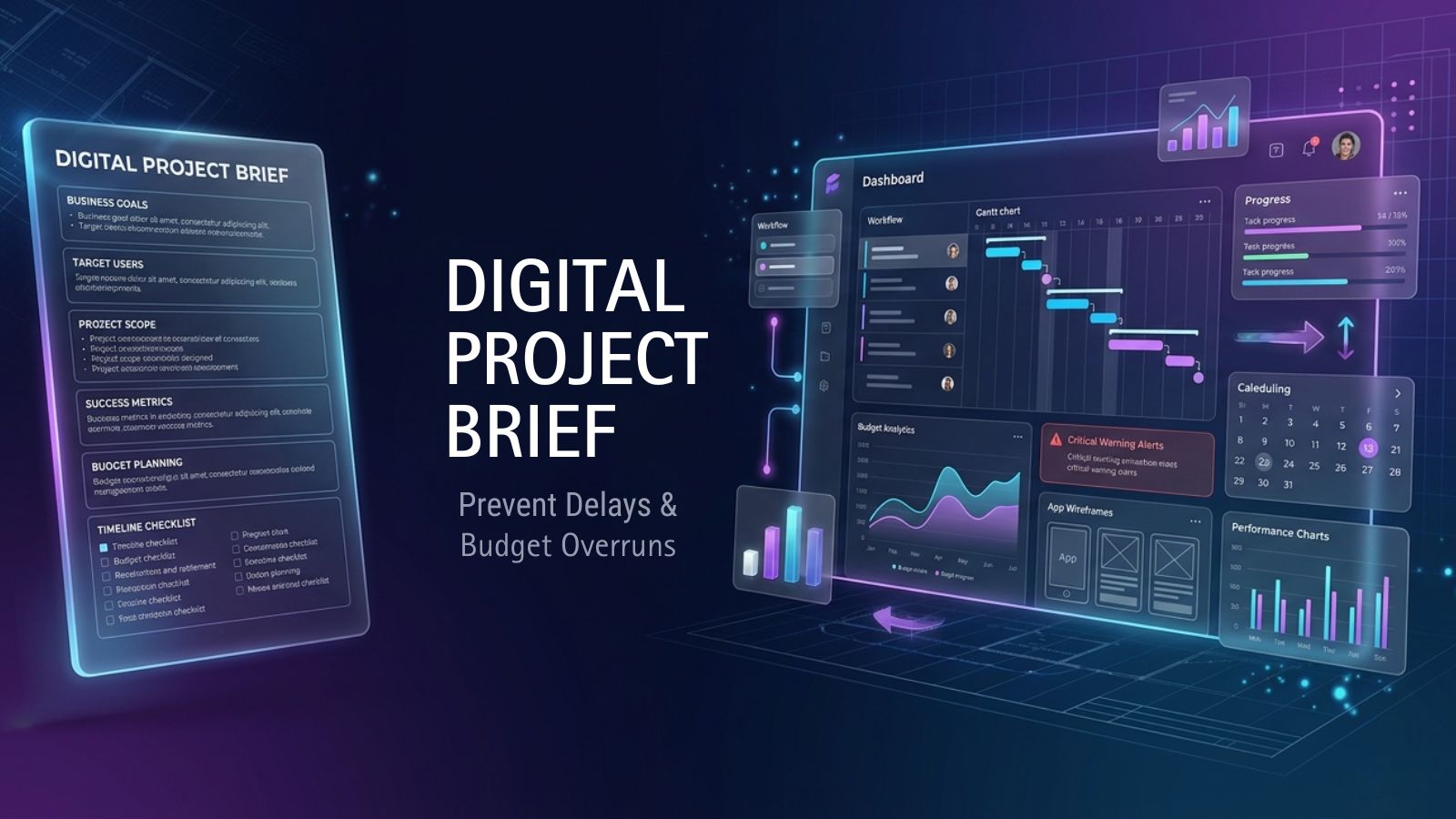
A well-structured project brief
does not need to be long. Here is the structure that works.
Section one is the project
overview. Two to three paragraphs describing the business, the current
situation, and why this project is being undertaken now.
Section two is the business
problem. A clear statement of the specific problem being solved and what the
situation looks like today versus what it should look like after the project.
Section three is target users. A
detailed description of the primary user group or groups with specific
demographic and behavioral details and any supporting data available.
Section four is project scope. The
must have features list, the should have features list, and the nice to have
features list. Each feature described in one to three sentences from a user
perspective rather than a technical perspective.
Section five is success metrics.
Four to six specific measurable outcomes that define whether the project has
achieved its purpose, with target values and timelines.
Section six is budget and timeline.
A transparent budget range, a target launch date or deadline constraint, and
any known technical constraints that are genuinely non-negotiable.
Section seven is open questions. A
list of things that need to be decided or clarified before development begins.
This section is important because it surfaces assumptions and gaps that would
otherwise cause problems during development.
Why Does a Good Project
Brief Save Money for Nepali Businesses?
The most common objection to
investing time in a proper project brief is that it delays getting started.
This objection misunderstands where project time and money actually get wasted.
Changes made during the brief
writing phase cost nothing. Changes made during design cost a few hours.
Changes made during development cost days and sometimes weeks depending on how
deep the change goes. Changes made after launch cost the most of all because
they require fixing something that is already in users' hands.
A project brief that takes two
weeks to write properly and saves three months of development rework is one of
the highest-return investments a Nepali business can make in a digital project.
The businesses and agencies that consistently deliver digital projects on time
and within budget in Nepal are almost always the ones with the strongest
project definition processes at the start.
Frequently Asked
Questions
1.
Do I need a project brief for a small website project in Nepal?
Yes, even for small projects. A
brief does not need to be long to be useful. Even a two page document covering
the business problem, target users, essential features, and success metrics
will prevent the most common misunderstandings that derail small projects. The
smaller the budget, the less room there is to absorb the cost of rework, which
makes a clear brief even more important.
2. Who should write the
digital project brief?
The business owner or project
sponsor should write the first draft because they understand the business
problem and user needs best. The development team or agency should then review
it, ask clarifying questions, and flag gaps or assumptions that need to be
resolved. The final brief should be agreed upon by both sides before any work
begins.
3. What
is the difference between a project brief and a technical specification?
A project brief defines what needs
to be achieved and why from a business perspective. A technical specification
defines how it will be built from a technical perspective. The brief comes
first and is written by the business side. The technical specification comes
second and is written by the development team based on the brief.
4.
How long should a digital project brief be for a Nepali business?
Five to eight pages is usually the
right length for most digital projects. Enough detail to align everyone on what
matters most without so much detail that it becomes a rigid document that
prevents good technical decisions from being made.
5. What
happens if requirements change after the brief is agreed?
Changes to requirements after the
brief is agreed should go through a formal change request process where the
impact on timeline and budget is assessed and agreed before the change is
implemented. This is normal and healthy as long as it is managed transparently.
A good brief actually makes change management easier because there is a clear
baseline document to compare against.
Conclusion
Digital projects fail in Nepal for
many reasons. Budget limitations. Technical challenges. Communication gaps.
Unrealistic timelines. But the single most common and most preventable cause of
failure is starting without a clear shared understanding of what is being
built, who it is for, and what success looks like.
A well-written digital project
brief takes time and honest thinking to produce. It requires the business to be
clear about its actual problem, realistic about its budget, specific about its
users, and disciplined about its scope. That clarity is not always comfortable
to achieve. But it is always worth it.
Every hour invested in a strong
project brief returns many hours saved during development. Every assumption
clarified in writing before development starts is one less expensive
misunderstanding to resolve after it.
The businesses in Nepal that approach digital projects with clear briefs, realistic expectations, and genuine collaboration with their development partners consistently deliver better products, faster, and within budget. The ones that start with vague instructions and figure it out as they go consistently spend more money, take longer, and end up with products that solve the wrong problem. Write the brief first. Everything else will be better because of it.