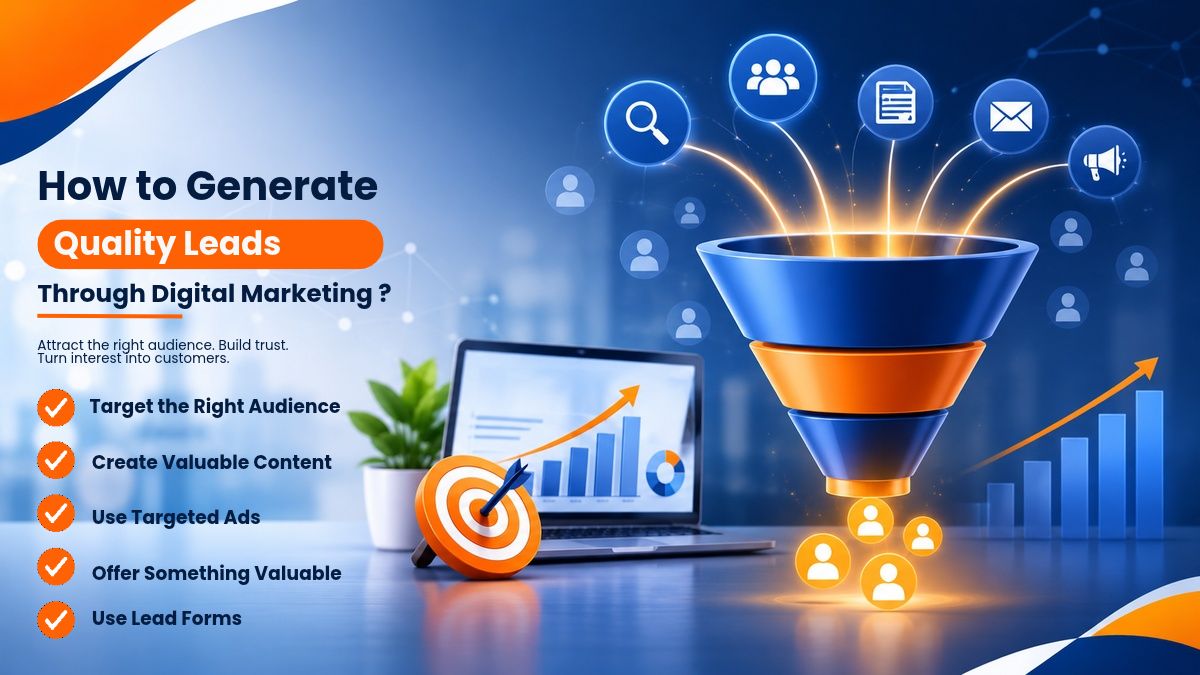
How
to Generate Quality Leads Through Digital Marketing: A Simple Guide
Introduction
Every
business wants more customers. But reaching more people does not always mean
making more sales. A thousand people may see your ad, yet only a handful actually
need what you sell.
That
is why smart businesses focus on quality leads: people who have a real need, a
real interest, and a real chance of buying.
In
this guide, you will learn:
- What
a lead and a quality lead are
- What
digital marketing is and how it brings in leads
- Six
digital methods and several non-digital methods to get quality leads
- How
to check which leads are worth your time
- How
to measure whether your efforts are working
What
Is a Quality Lead?
A
lead is a person or business that shows interest in what you offer by taking an
action, such as filling out a contact form, asking for a quotation, subscribing
to a newsletter, or calling you.
A
quality lead is a lead who is likely to become a paying customer because their
needs, budget, and requirements match what you offer.
A
simple example
Imagine
a company in Kathmandu that builds websites.
|
Person |
What they did |
Type |
|
Sita |
Read a blog post
about website development |
Visitor |
|
Ramesh |
Filled out the
contact form asking about website services |
Lead |
|
Anita |
Owns a clothing
shop, needs an online store, has a budget, and wants to start soon |
Quality Lead |
Anita
is the most valuable because she has a clear need, the money, and the intention
to act.
5
signs of a quality lead
|
Sign |
Question to ask |
|
Genuine interest |
Do they really want
this product or service? |
|
Relevant need |
Does it match what
we offer? |
|
Suitable budget |
Can they afford it? |
|
Buying intention |
Are they planning
to buy or hire soon? |
|
Decision power |
Can they make or
influence the decision? |
What
Is Digital Marketing?
Digital
marketing means promoting your products, services, or brand through online
channels such as search engines, social media, email, and websites.
Unlike
traditional methods (newspapers, posters, TV), digital marketing lets you
choose who sees your message, for example by location, age, or
interests, and lets you see exactly how people respond.
The
most common channels are:
- SEO
(Search Engine Optimization):
Helping your website show up on Google for free.
- Social
media marketing:
Promoting on Facebook, Instagram, LinkedIn, and TikTok.
- Paid
advertising (PPC and SEM):
Paying for ads on Google or social media. With pay-per-click, you pay only
when someone clicks.
- Content
marketing:
Sharing useful blogs, videos, and guides.
- Email
marketing:
Sending updates and offers to people who have shared their email.
The
goal is not just to be seen. It is to attract the right people, build trust,
collect leads, and finally increase sales.
How
Digital Marketing and Quality Leads Work Together
It
works by following ways:
- Digital
marketing
brings the right people to your business.
- Lead
generation
turns their interest into inquiries.
- Lead
qualification
finds which inquiries are most likely to buy.
- Follow-up turns those leads into
customers.
Real-life
example: a recruitment campaign
Suppose
an HR agency wants to find candidates for a job vacancy and hires Dirgha
Technologies to help.
- Create
the content.
We design an eye-catching vacancy post with the job title, requirements,
salary (if available), and how to apply.
- Publish
it. The post
goes on the agency's Facebook and Instagram pages.
- Boost
it. We run a
paid promotion aimed at people by location, age, and interests.
- People
respond.
Interested job seekers message on Facebook, call, or use the contact
details.
- Leads
arrive. Every
inquiry becomes a lead for the agency.
- The
agency qualifies them.
It checks each candidate's education, skills, experience, and
availability.
Not
every message is a quality lead. A candidate who meets the requirements and
truly wants the job is the one worth following up first.
6
Digital Ways to Generate Quality Leads
1.
Search Engine Optimization (SEO)
It
is the process of improving website so it appears when people search on Google.
Example:
Someone searches "best website development company in Nepal." If your
website is well optimized, it can appear in the results.
Why
it brings quality leads:
These people are already searching for a solution, so they usually have a clear
need and are more likely to contact you.
2.
Social Media Marketing
It
means sharing posts, project photos, customer reviews, tips, and offers
on platforms like Facebook, Instagram, LinkedIn, and TikTok. Example: A
software company shares its completed projects on LinkedIn to reach business
owners who need software.
Why
it brings quality leads:
You can reach people by their interests and professions, and interested users
can message you or visit your website directly.
3.
Paid Advertising (Google Ads and Facebook/Instagram Ads)
Paying
to show your message to a chosen audience is called paid advertising.
- Google
Ads reach
people who are actively searching.
- Facebook
and Instagram Ads
reach people by location, interests, and more.
Example:
An e-commerce website developer runs Google Ads for searches like
"e-commerce website development in Nepal."
Why
it brings quality leads:
You choose who sees the ad and send them to a focused page or form, so the
people who respond are more relevant.
4.
Content Marketing
It
refers to publishing helpful blogs, videos, guides, and case studies
that answer people's questions.
Example:
How Digital
Marketing Helps Small Businesses Grow?, How to Improve Your Website's Google
Ranking, SEO vs Google Ads: Which Is Better for Your Business? These can
be topics for a digital marketing agency:
Why
it brings quality leads:
Helpful content builds trust. When readers learn something useful from you,
they are more likely to contact you when they need professional help.
5.
Email Marketing
Sending
newsletters, updates, offers, and follow-up messages to people who have given
you their email address is called email marketing. Example: Emailing people who
earlier asked about your website services, with a new offer or a helpful tip.
Why
it brings quality leads:
It keeps you in touch with people who already showed interest and gently
encourages them to take the next step.
6.
Landing Pages and Contact Forms
A
landing page is a single page built for one action, such as requesting a
quotation or booking a consultation.
A
good form asks for:
- Name
and company name
- Email
and phone number
- The
service they need
- Estimated
budget
- Project
details
Why
it brings quality leads:
The form collects the information you need to judge, quickly, whether an
inquiry is a good fit.
Other
Ways to Get Quality Leads (Beyond Digital)
Digital
marketing works best when combined with other methods:
- Referrals
and word of mouth:
Happy customers recommend you to others. People trust recommendations from
people they know, so referred leads often arrive with trust already built.
- Networking
and events:
Meet business owners at conferences, trade fairs, seminars, and workshops.
- Cold
calling:
Phone businesses that may need your service, even if they have not asked
yet. For example, a software company can call a business that still runs
everything on paper.
- Direct
email outreach:
Send personal emails to selected businesses. For example, a web company
can write to a local clothing store with an outdated website and explain
how an online store could bring in orders.
- Partnerships: Team up with businesses that
serve the same customers but offer different services, such as a web
developer and a graphic design agency, and refer clients to each other.
- Testimonials
and case studies:
Share customer feedback and stories of problems you solved. Real results
build trust.
- Traditional
marketing:
Newspaper ads, flyers, banners, radio, TV, and business cards still help
you reach people who are less active online, especially in a local market.
How
to Qualify Leads
Getting
leads is only half the job. Lead qualification means checking which leads are
most likely to become customers, so you spend your time wisely.
Use
these five questions:
|
Factor |
What to check |
|
Interest |
Are they genuinely
interested? |
|
Budget |
Can they afford the
service? |
|
Need |
Does our service
solve their problem? |
|
Timeline |
When do they plan
to buy? |
|
Authority |
Are they the
decision-maker? |
Two
common lead types
- Marketing
Qualified Lead (MQL):
Someone who has shown interest through your marketing, such as downloading
a guide, subscribing to emails, or visiting your service pages many times.
- Sales
Qualified Lead (SQL):
Someone your sales team has checked and who is ready to talk about buying.
Example: A person downloads your website
development guide. That is an MQL. Later, they request a quotation, share their
project details, and confirm their budget. Now they are an SQL.
The
Lead Generation Process in 5 Steps
- Attract: Reach people through SEO,
social media, ads, and content.
- Capture: Encourage them to fill out a
form, call, message, or subscribe.
- Qualify: Check their interest, need,
budget, and timeline.
- Follow
up: Contact
them by phone, email, or meeting, and send a proposal.
- Convert: Turn them into paying
customers through a purchase, agreement, or booking.
How
to Measure Success
Do
not judge your results only by how many leads you get. What matters is how many
become paying customers and how much each one costs.
|
Measure |
What it tells
you |
|
Total leads |
How many inquiries
you received |
|
Qualified leads |
How many of them
are a good fit |
|
Conversion rate |
What percentage of
leads became customers |
|
Cost per lead (CPL) |
How much you spent
to get one lead |
|
Cost per
acquisition (CPA) |
How much you spent
to win one paying customer |
Example:
A business spends
NPR 50,000 on a campaign and gets 100 leads. Ten of them become paying
customers.
- Conversion
rate = (10 ÷
100) × 100 = 10%
- Cost
per lead =
50,000 ÷ 100 = NPR 500
- Cost
per acquisition
= 50,000 ÷ 10 = NPR 5,000
If
each customer is worth more than NPR 5,000 to the business, the campaign is
profitable. These three numbers quickly show whether you are attracting the
right audience.
8
Best Practices for Quality Leads
- Know
your audience.
Decide who needs your product before you start any campaign.
- Create
useful content.
Answer real questions and solve real problems.
- Use
clear calls to action.
Tell visitors exactly what to do: "Request a quote" or
"Book a free consultation."
- Keep
landing pages simple.
Short forms and clear service details get more responses.
- Build
trust. Show
reviews, testimonials, past projects, and case studies.
- Reply
quickly.
Contact interested people before they lose interest or choose a
competitor.
- Track
your results.
Use Google Analytics, Google Search Console, and CRM software.
- Choose
quality over quantity.
Ten relevant leads are worth more than a hundred unrelated ones.
Conclusion
More
traffic does not automatically mean more sales. The real goal is to reach
people who truly need what you offer, and then to guide them from first
interest to final purchase.
Digital
marketing (SEO, social media, paid ads, content, and email) is a powerful way
to do this. Combined with referrals, networking, partnerships, and personal
outreach, it becomes even stronger. The most effective approach is to use
several methods together, qualify every lead, respond quickly, and keep
measuring your results.